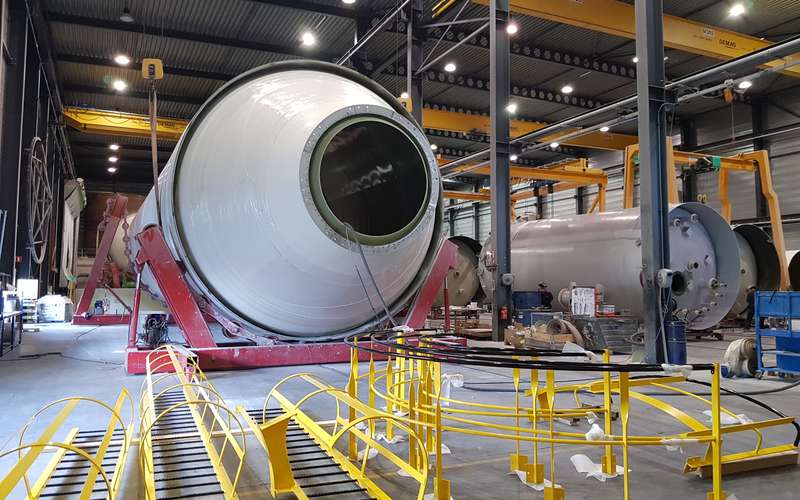
Look inside the production of composite silos and tanks in Lemmer
Composite silos and tanks for bulk storage require more than just storage capacity. They must match your raw material, your process, and your location.In Lemmer, we manufacture custom composite silos and tanks for bulk storage applications in food, feed, chemical, industrial, and agricultural markets. From engineering to after sales service, we support you throughout the entire process.Our production video shows how a composite silo or tank is built. Layer by layer, using glass fiber reinforced plastic. Designed for long term performance and minimal maintenance costs.Why choose composite silos and tanks for bulk storageIn bulk storage, process reliability is essential. Downtime, condensation, or corrosion can directly affect product quality and operational continuity.Composite silos and tanks made of glass fiber reinforced plastic offer clear advantages:Corrosion resistant, even with aggressive or moisture sensitive productsSeamless and ultra smooth interior for optimal bulk flowThermally insulating, reducing the risk of condensationLow maintenance and suitable for long term useAvailable up to 1,500 m³ capacity and diameters up to 9 metersThe smooth internal wall supports controlled mass flow or funnel flow, depending on your product and required discharge behavior.Custom composite silo or tank for your bulk storageNo bulk storage application is the same. Storing flour requires different specifications than salt, fertilizers, or chemical liquids.That is why every composite silo or tank starts with tailored engineering. We analyze, among other factors:Bulk density and abrasiveness of the stored productSensitivity to moisture and temperature fluctuationsRequired flow characteristics and discharge behaviorAtex requirements and safety systemsWind, snow, and seismic loadsBased on this, we design a composite silo or tank fully adapted to your bulk storage process and installation.Insulation can be fully integrated into the wall construction. Components such as hoppers, platforms, ladders, and safety systems are configured to match your process requirements.Production is standardized where possible. The design is always custom made.Production of composite silos and tanks in LemmerAt our factory in Lemmer, we build composite silos and tanks on multiple production lines. Glass fiber and resin are combined to create a strong, seamless structure resistant to corrosion and chemical exposure.More than 100 employees work daily on engineering, production, quality control, and logistics.With decades of experience in bulk storage of flour, starch, grain, salt, and other materials, we understand which configuration ensures reliable long term performance.From engineering to after sales serviceIn bulk storage, responsibility does not end at delivery.We guide you through the entire process:Consultation and engineering in collaboration with your engineers or system integratorIn house production and quality assuranceTransport and on site installationInspections, maintenance, and damage repair through our service departmentThis ensures that your composite silos and tanks for bulk storage continue to perform reliably, also in the long term.Composite bulk storage without compromiseComposite silos and tanks combine strength, insulation, and corrosion resistance in one integrated construction. This makes them suitable for a wide range of bulk storage applications where quality and continuity are critical.Watch our production video and discover how we realize custom composite silos and tanks for bulk storage.Quality in. Quality out.
.png)
Polem works on circular composite storage tanks
The transition to a circular economy requires new materials and new production methods. European legislation is accelerating this development. Thermoplastic composites offer clear potential in this context.Together with ThermoPlastic composites Application Center, Autonational Composites and CompTape, Polem is working on the next step in circular composite storage tanks.Over the past two years, the required technology for large scale and cost efficient tape winding has been developed. This includes new winding strategies, adapted equipment and a full scale demonstrator. At the same time, structural calculations have been carried out to verify compliance with relevant European standards.Thermoplastic composites require fundamentally different processing methods compared to thermoset systems. For that reason, new equipment and winding strategies have been developed and tested in house at industrial scale.Innovation starts with material selection. But it only proves its value when the solution works in practice.Would you like to learn more about this development or about circular storage solutions. Please contact us.
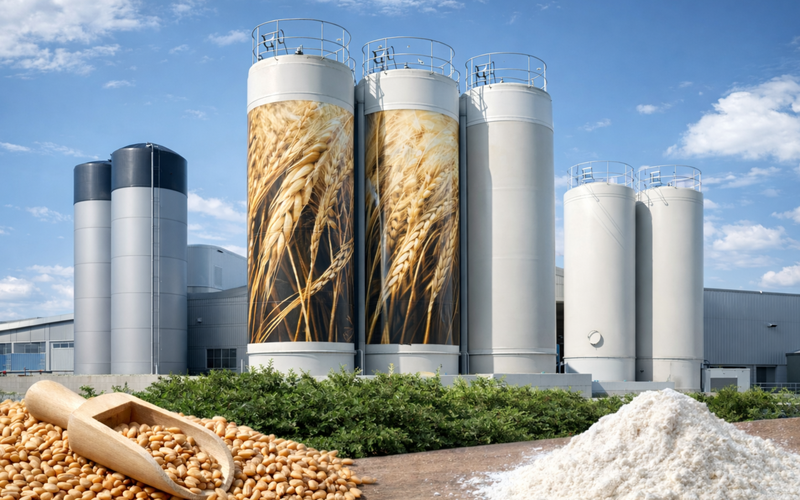
5 common contamination risks in food storage, and how to prevent them structurally
Every grain, every drop counts. In food and feed storage, contamination risks are not acceptable. They directly affect product quality, food safety and your reputation. What is often underestimated is that many risks do not originate during processing, but already during storage. Invisible at first, but with serious consequences.In this blog, we outline five common contamination risks in food storage. More importantly, we explain how the right design choices allow you to eliminate these risks structurally.1. Product buildup and bacterial growthThe riskProduct residues remain in corners, seams, welds or rough internal surfaces. These areas create ideal conditions for bacteria and moulds, especially when moisture or temperature fluctuations are present. A single residue can already lead to contamination.The solutionA fully seamless and ultra smooth internal wall prevents product buildup. Combined with mass flow design, the FIFO principle is ensured. Older product always leaves the silo or tank first. No stagnant zones. No breeding ground for bacteria.2. Cross contamination due to material porosityThe riskPorous materials can absorb moisture, odours and product particles. This can cause cross contamination between batches. Particularly in the case of allergens or specific food applications, this is unacceptable.The solutionComposite material is non porous. The surface absorbs nothing and remains chemically stable. Each new batch comes into contact with a clean, uncontaminated wall. For food applications, only food grade resins are used, tested in accordance with EU 1935 2004 and EU 10 2011. Certified and verifiable.3. Condensation and moisture ingressThe riskTemperature differences between inside and outside lead to condensation on silo and tank walls. Moisture entering the product causes caking, mould growth and quality loss. In animal feed, nutritional value is reduced. In food products, quality issues and rejection occur.The solutionComposite has a naturally low thermal conductivity. This limits temperature fluctuations and keeps the dew point under control. When required, silos and tanks can be fully factory insulated. Without thermal bridges. Without weak spots. The product remains dry and stable.4. Material stability and surface hygieneThe riskIn the food industry, stainless steel and composite are predominantly used. Stainless steel does not corrode and is therefore suitable for food applications. Steel and aluminium are hardly used in this sector. Even with stainless steel, welds, joints and surface finishing require ongoing attention, as these areas can be prone to product buildup and contamination.The solutionComposite is fully seamless and chemically inert. The material does not react with food products and retains its properties for decades. No welds. No surface treatments. No coatings that need periodic renewal. This improves structural food safety and significantly reduces maintenance costs.5. Insufficient cleanability and hidden wearThe riskSteel and stainless steel can corrode or oxidise, especially when exposed to moisture or mildly aggressive products. Corrosion not only weakens the structure, but may also release particles into the stored product.The solutionA simple, smooth and seamless design enables effective cleaning and reduces downtime between batches. Periodic inspections by the manufacturer provide insight into the actual condition of your storage system. Targeted measurements and reporting prevent minor deviations from developing into major risks.Food safety starts with storageContamination risks in food storage are not inevitable. With the right material selection, design and inspection strategy, they can be eliminated. Polem develops composite silos and tanks specifically designed for the food industry. Seamless, strong and ultra smooth. With a clear focus on hygiene, reliability and long service life.Every step in the process matters.Every grain, every drop.Quality in, quality out.Would you like to learn more about food safe storage?Contact our specialists or discover our solutions for the food processing industry on our food applications page.
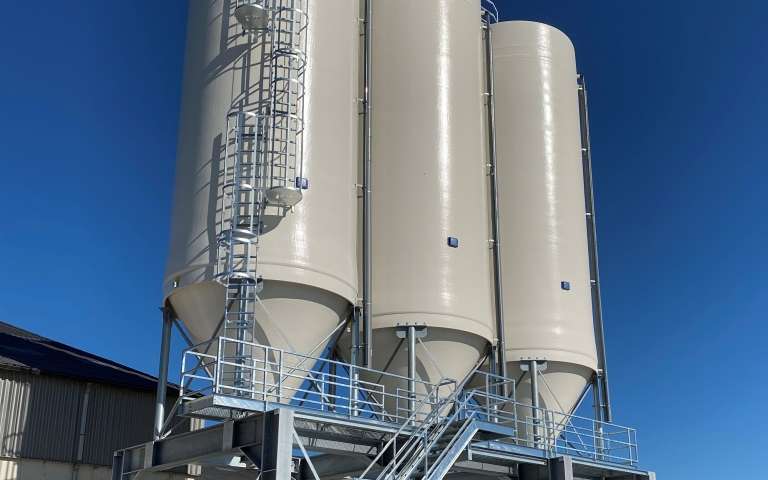
Buying a feed silo. 7 key points to consider
At first glance, a feed silo may seem like a simple part of your installation. In practice, however, the silo has a major impact on continuity, hygiene and the quality of your feeding process. A wrong choice can lead to blockages, loss of feed quality, additional maintenance or even spoilage. Purchasing a feed silo is therefore a long term investment. These are the seven most important points to consider when buying a feed silo.1. Type of feed and product characteristicsNot all feed behaves in the same way. Meal, pellets, granulates and minerals differ significantly in flow behaviour, moisture sensitivity and abrasion. The silo must be specifically designed for these characteristics. This includes the correct hopper angle, wall construction and, if required, flow support. Without proper alignment, bridging, residual product and irregular discharge will occur.
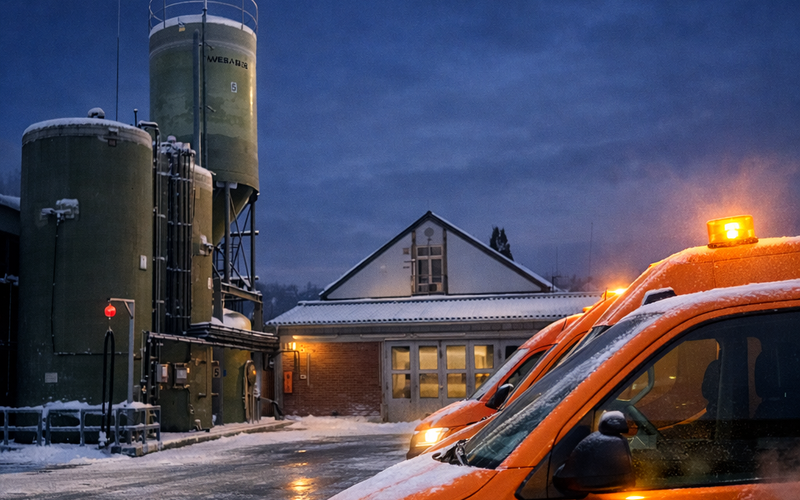
Reliable storage makes the difference in winter road safety
Winter conditions put infrastructure and organisations to the test every year. Snow, frost and ice require fast and well coordinated action. Roads must remain safe and spreading operations cannot be delayed. It is precisely in these moments that reliable storage and a continuous product flow prove their value.Over the past week, Polem road salt silos and brine makers have made an essential contribution to road safety. Thanks to stable salt storage and the continuous availability of brine solution, spreading vehicles could be supplied on time and deployed effectively. Without interruptions. Without uncertainty.Continuous availability, even in extreme conditionsWinter road maintenance is not only about equipment on the road. It starts with storage. Salt and brine must remain available under all conditions. Condensation, corrosion or blockages can slow down operations and have a direct impact on road safety.Polem solutions are developed specifically for these demanding conditions. Composite road salt silos and tanks are corrosion resistant, low maintenance and ensure a constant flow. Even during frost and prolonged use, the system performs exactly as intended. This provides certainty when every minute counts.Safety through preparation and technologyThe use of well functioning installations highlights the importance of preparation. Investing in reliable storage solutions in advance prevents problems during peak moments. This allows organisations to focus on what really matters. Keeping roads safe and traffic moving.Whether for municipal winter services, regional authorities or industrial applications, the principle remains the same. Storage must do what it is supposed to do. Quietly, reliably and without surprises.Learn more about solutions for winter road maintenancePolem delivers complete solutions for winter road maintenance, from salt silos and mobile silos to brine systems and tanks, always tailored to the application, the environment and the intended use, if you would like to learn more about our winter road maintenance solutions you can contact our market specialist Piet Smits or visit the road salt page.
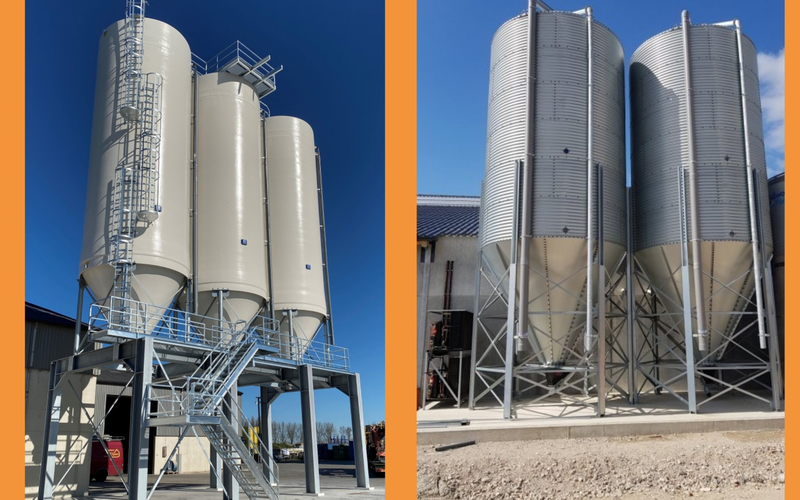
Composite or steel. A comparison for industrial storage
When selecting a silo or tank, steel is often the default choice. It is familiar, widely used and has been part of industrial installations for decades. At the same time, the use of composite materials is growing rapidly. Not as a replacement for the sake of innovation, but because in many applications it demonstrably performs better.In this blog, you will find a substantive comparison between composite and steel. Not based on marketing claims, but on material properties that make a real difference in daily operation.
The right flow in a white start
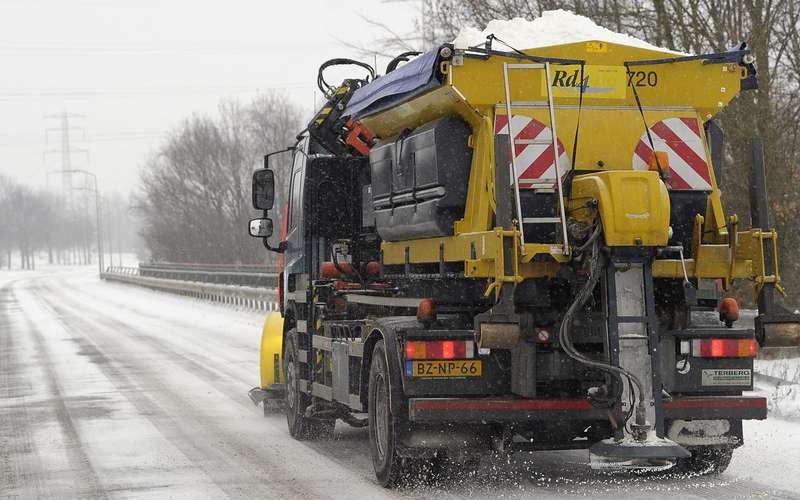
Snow on roofs, roads covered in a silent layer of ice, and a landscape that slows everything down for a moment. It is precisely at times like these that it becomes clear how important it is for processes to continue running smoothly. Without disruption. Without discussion. With certainty.On behalf of Polem, we wish you a happy, safe, and successful 2026. A year in which quality remains central. In every grain. In every drop.Winter leaves nothing to chanceSnow and frost place high demands on infrastructure. Especially when it comes to combating slippery conditions. Roads must remain safe. Gritting trucks must be able to load. Salt must keep flowing.Storage plays a greater role in this than is often realized. Salt that is exposed to moisture, temperature fluctuations, or condensation loses its workability. This results in bridging, clumping, and blockages. Precisely at the moment when speed counts.Why Polem salt silos make the differenceOur salt silos are designed for conditions where nothing can fail. Composite as a material offers concrete advantages in this respect:Corrosion resistant. Salt does not affect the material, even after years of intensive use.Thermally stable. The properties of composite limit temperature fluctuations and condensation. This keeps the salt dry and easy to process, even in frost and thaw conditions.Seamless inner wall. The mirror-smooth surface structure ensures reliable flow. The product keeps moving. Loading is predictable. This means less downtime and fewer manual interventions.The silo therefore supports not only storage, but the entire winter process. From stock to spreading.

Moving forward together. With peace of mind in the flow.
The end of the year is a time to pause and reflect. Not to look back with grand words, but to realize what happens every day. In Lemmer. At your organization. In processes that simply continue.This year, production lines continued to run thanks to reliable storage. Every grain. Every drop. Without disruption. That's what it's all about.We worked on projects in food, feed, industry, and infrastructure. From custom silos to smart tank solutions. Always with the same focus. The right flow. Seamless. Strong. Smooth as glass.What drives us is not just what we deliver. It's how we do it. With craftsmanship. With attention. With agreements that are right. Engineers, technicians, and colleagues who know that storage is not a side issue, but a crucial part of the process.In the new year, we will continue to do what we do best. Developing storage that eliminates risks. Limits maintenance. Protects raw materials. So that you can focus on your end product.Thank you for your trust. We look ahead. Calmly. Confidently. With confidence in the flow.Polem.Every grain, every drop.Quality in. Quality out.

Polem supports Papageno House Fryslân Lemmer with a Christmas donation
This year, Polem has once again made a conscious decision to focus on social involvement close to home. Instead of commercial end-of-year gifts, we have made a Christmas donation to the Papageno Huis Fryslân in Lemmer. The Papageno Huis offers young people with autism a safe and inspiring place where they can develop, be themselves, and take steps towards work and independence. This initiative is of great value to the region and to the people who use it every day. At Polem, we believe that involvement starts in the environment in which we work and live. By supporting a local charity every year, we are happy to contribute to initiatives that make a real impact. We would like to thank Papageno Huis Lemmer for their wonderful work and are proud to have been able to contribute to it.
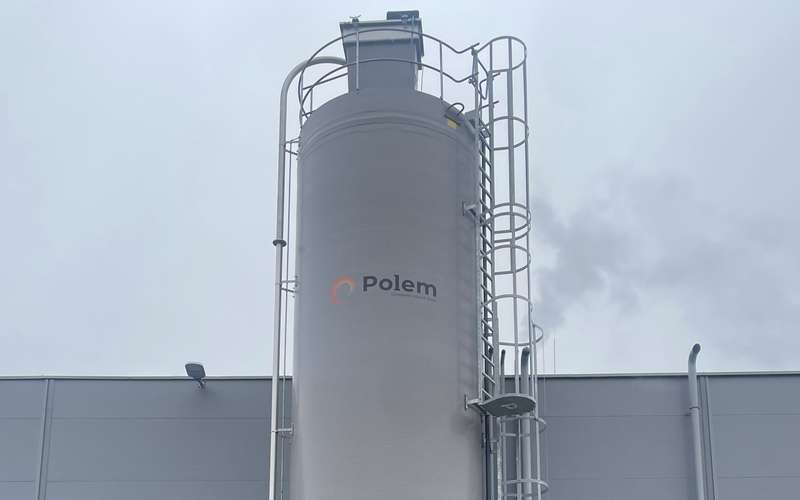
Polem composite silo for starch storage in Lithuania
A Polem silo type SKS 7/30/80 was delivered from Lemmer via SRP-Europe to a customer in Lithuania. The silo is used for storing dry starch and is designed for a bulk density of 700 kg/m³. Filling takes place centrally via the roof.
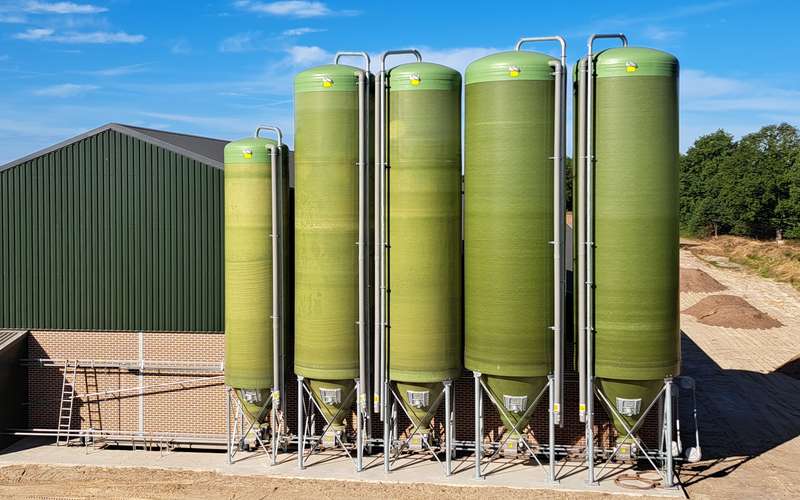
Five new Polem silos in Spoordonk
We recently supplied five new silos to a pig farm in Spoordonk: one measuring 20 m³, two measuring 40 m³, and two measuring no less than 54 m³. They look great next to the new barn – ready for years of reliable storage.Seamless, strong, and smooth as glass. That's Polem quality.
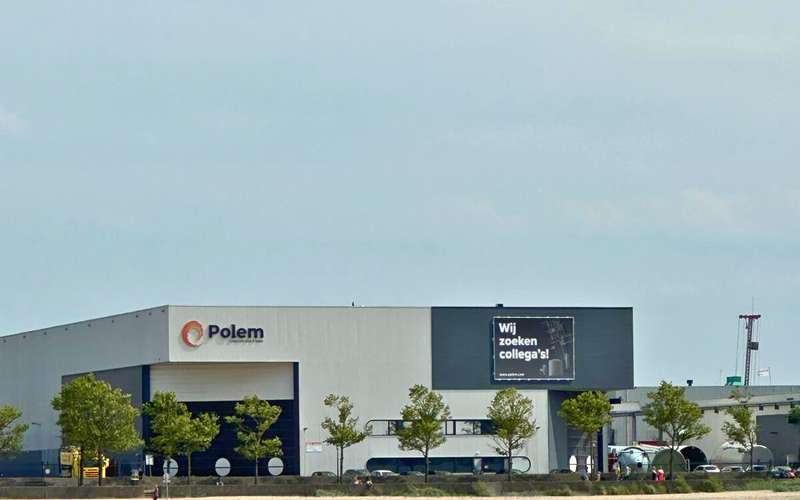
Summer wrap-up: this was Polem this summer
Summer 2025 is almost over. As the first autumn breeze makes its appearance, we at Polem look back on a summer full of craftsmanship, down-to-earth pride, sunshine, and surprising content. No quiet season for us – we stayed fully active.Below is a brief overview of this summer's highlights:1. Composite: the best choice even in the heat We kicked off July with a spotlight on insulation. Because even at 30+ degrees, our silos stay cool inside. Composite = stable, even in extreme temperatures.2. Animal feed storage? Top condition guaranteed From corn to compound feed: with a Polem silo you keep everything dry, fresh and lump-free. We explained how smooth walls and smart hoppers make the difference.3. Salt in July? Absolutely. Planning ahead pays off. In our whitepaper and blog, we called on municipalities and contractors to start working on their winter supplies now. Result: plenty of Expert Check requests.4. Expert Check: summer = planning season Our summer post "Vacation for your silo? Not at all." struck the right chord. Smart companies plan maintenance before it's necessary. Many checks are now scheduled for after the construction holiday.5. Skûtsjesilen & silos: Frisian pride on and off the water From our location in Lemmer, we had a live view of the Skûtsjesilen. We brought it together in a summer blog about precision, balance, and connection to our region.6. Cleaning without hassle Hygiene is top priority in food & feed. With composite, cleaning is no hassle: fewer residues, less water, less downtime. Simplicity pays off.What's coming up?This autumn we'll start with new customer casesWe're launching content about silos for the chemical and food industriesAnd... we'll naturally continue focusing on service, innovations, and international growthThis weekend in Lemmer: Glemmer Beach FestivalFinally: are you coming to Lemmer this weekend? Right across from our location, the Glemmer Beach Festival is taking place. Polem is a proud sponsor of this event, where music, beach, and fun come together.Thank you for following, responding, and thinking along with us this summer. We hope you enjoyed reading our content as much as we enjoyed creating it.Do you have a topic you'd like to see featured in our blogs or LinkedIn posts? Let us know at marketing@polem.comPolem composite silos & tanks – always in motion. Even in summer.