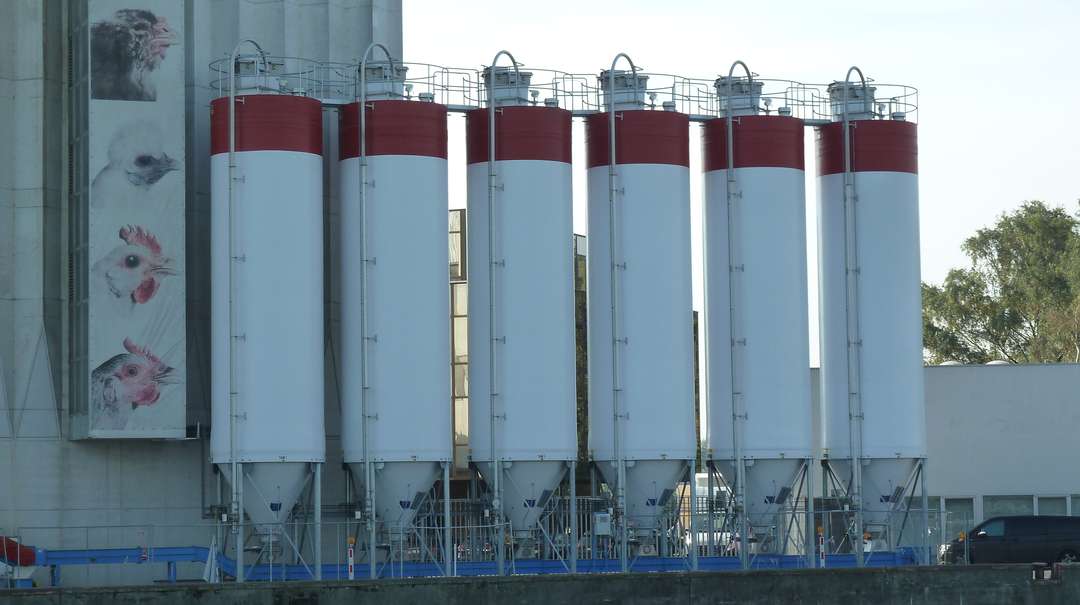
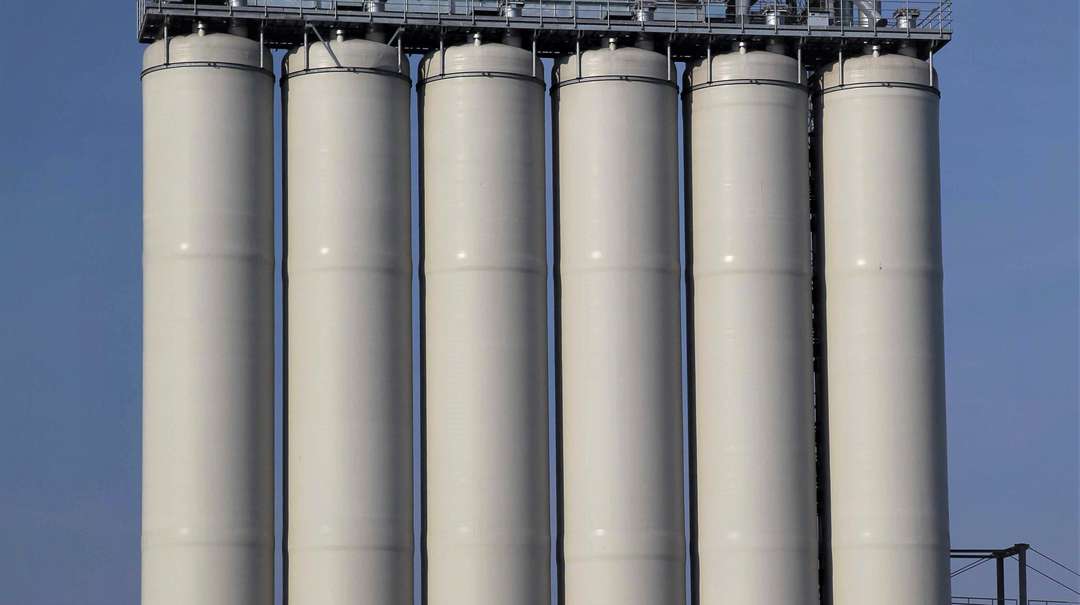
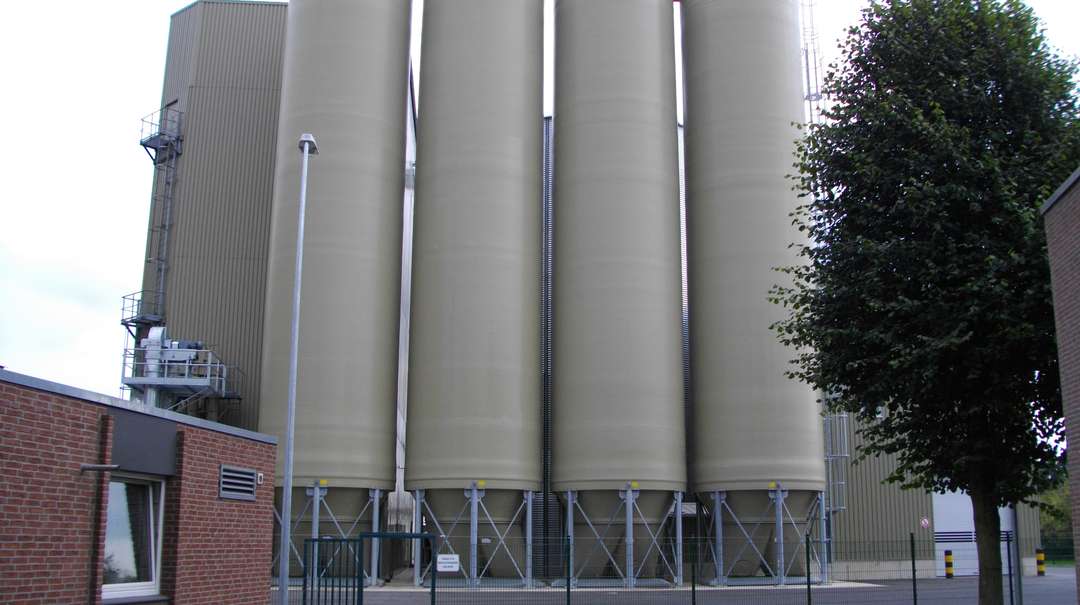
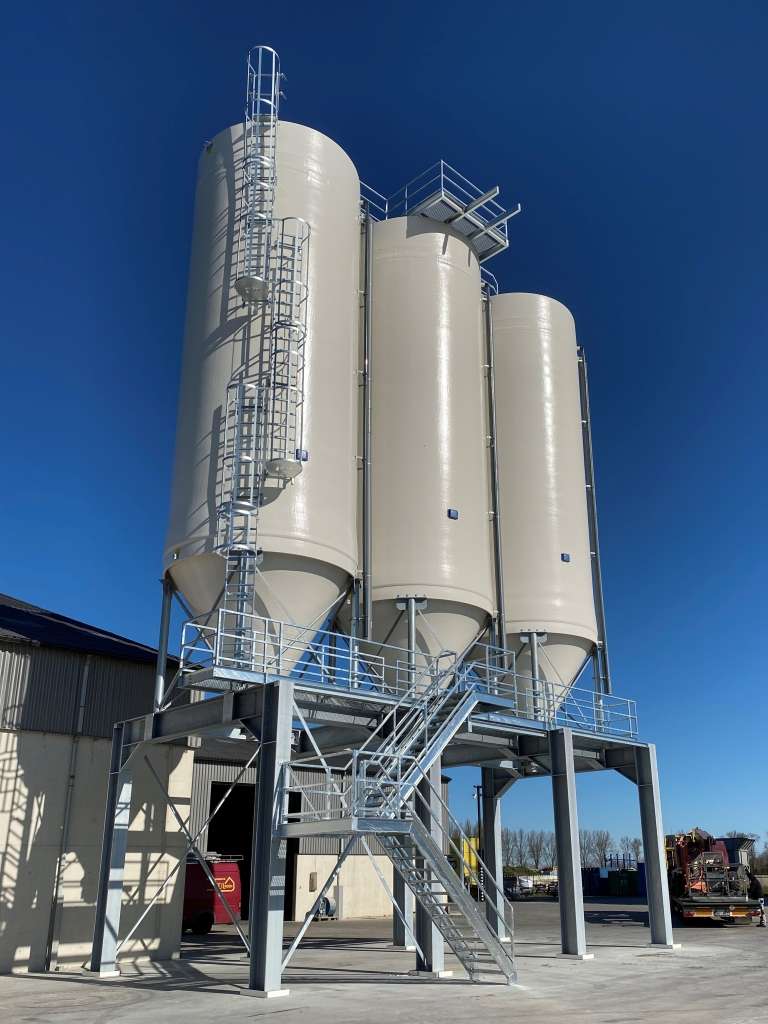
At first glance, a feed silo may seem like a simple part of your installation. In practice, however, the silo has a major impact on continuity, hygiene and the quality of your feeding process. A wrong choice can lead to blockages, loss of feed quality, additional maintenance or even spoilage. Purchasing a feed silo is therefore a long term investment. These are the seven most important points to consider when buying a feed silo.
1. Type of feed and product characteristics
Not all feed behaves in the same way. Meal, pellets, granulates and minerals differ significantly in flow behaviour, moisture sensitivity and abrasion. The silo must be specifically designed for these characteristics. This includes the correct hopper angle, wall construction and, if required, flow support. Without proper alignment, bridging, residual product and irregular discharge will occur.
The horizontal floor silos work perfectly. The feed never gets stuck and there's much less segregation, says Harm Rijkers.
2. Calculate the correct capacity
The capacity of your feed silo determines how often deliveries are required and how long feed is stored. A silo that is too small leads to frequent deliveries. A silo that is too large results in long storage times, which can negatively affect feed quality.
Take daily feed consumption and desired delivery frequency into account. For pigs and poultry, a buffer of four to six days is common. In cattle farming, a maximum feed storage period of four weeks is often recommended. Longer storage increases the risk of quality loss.
3. Flow behaviour. Mass flow or funnel flow
For animal feed, mass flow is preferred in most cases. The entire product moves downwards uniformly, ensuring the first in first out principle. This prevents ageing and segregation of the feed.
With funnel flow, mainly the centre of the silo empties while material along the walls remains stationary. This may be acceptable for some products, but for feed it increases the risk of stagnant zones and quality deterioration. Making the right choice requires knowledge of both the product and the process.
Since installation, no single problem has been reported with this silo. And I must also say that this is one of the cleanest starch silos I have ever seen
4. Choose the right material
The silo material determines service life and maintenance costs. Traditional steel silos are sensitive to corrosion, especially when storing feed with aggressive components. GRP or composite silos are fully corrosion resistant and have a service life of twenty to thirty years.
Composite also offers higher insulation values than steel. This reduces condensation inside the silo. Less condensation means less caking, reduced mould growth and preservation of feed value. A dry product remains consistent for longer.
5. Hygiene starts with a seamless inner wall
Feed must not remain inside the silo. Residual product can spoil and contaminate new batches. A smooth and seamless inner wall is therefore essential.
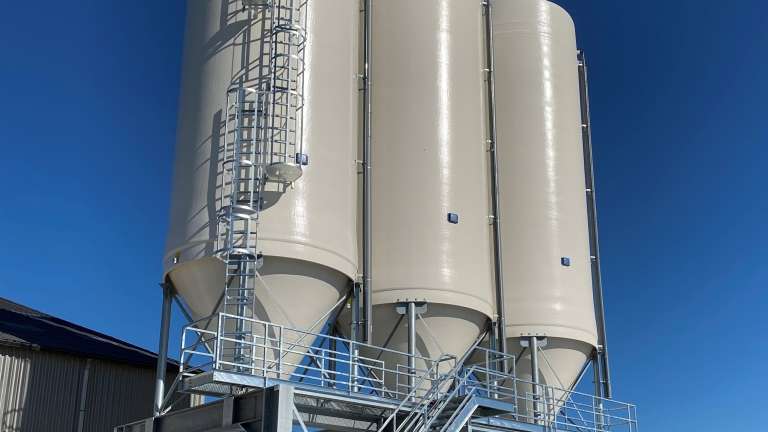
GRP feed silos are produced in one piece, without welds or seams. The product flows evenly along the wall without accumulation. This simplifies cleaning and contributes to a hygienic feeding system that meets modern livestock requirements.
6. Prevent bridging and consider maintenance
Bridging occurs when feed cakes and stops flowing. This is common with poorly flowing products such as fine meal or bran. A properly dimensioned vibration bottom brings the product into controlled motion and ensures continuous discharge.
Even a well designed silo requires periodic inspection. Consider accessibility, inspection hatches and the ability to measure wear at an early stage. Preventive maintenance avoids unplanned downtime and high repair costs.
7. Choose custom design and process integration
Every feeding installation is different. The number of animals, type of feed, available space, filling systems and discharge all influence the design. Standard solutions rarely fit real world conditions perfectly.
Custom design ensures the correct diameter, hopper angle, outlet and optional insulation. This allows the silo to integrate seamlessly into daily operations and keeps the flow within the process under control.
The right choice prevents problems
Buying a feed silo involves more than selecting a volume and diameter. It requires insight into product behaviour, process knowledge and material properties. Polem develops feed silos based on this integrated approach. Seamless, strong and tailored to your feed and process. This ensures consistent feed quality and a reliable operation.
Would you like advice on the right feed silo for your business. Contact our advisors or easily configure your silo using our agricultural configurator.

Richard van Lierop
Market specialist for agriculture and animal feed